The Best Way to Introduce Solid Foods to Baby
- C. Jennings
- Apr 28
- 8 min read
Updated: May 1
One of the most exciting milestones in your baby's first year is also one of the most
nerve-wracking — introducing solid foods. Suddenly, you're asking yourself a hundred questions at once: When do I start? What do I feed them first? What if they gag? What if they're allergic? It can feel like a lot.
The good news is that introducing solid foods to baby doesn't have to be complicated or stressful. With the right information, a little patience, and a few smart strategies, you can make this transition fun and safe — for your baby and for you.
We're breaking it all down — when to start, what to feed, what to avoid, and seven of the best tips to make the process go as smoothly as possible. Let's dive in.
When Should You Start Introducing Solid Foods
to Baby?
Timing is everything. Most health experts, including the American Academy of Pediatrics (AAP), recommend starting solid foods around 6 months of age. Before that, breast milk or formula provides everything your baby needs to grow and thrive.
However, every baby develops at their own pace. Some babies might show signs of readiness as early as 4 to 6 months, while others take a little longer. Age alone isn't the only thing to consider — you also want to make sure your baby is showing the right developmental signs before you start.
Signs Your Baby Is Ready for Solid Foods
Before you pull out the high chair, look for these key signs that your baby is truly ready
for solids:
• They can sit up with little or no support.
Your baby needs to be upright to swallow food safely.
• They have good head and neck control.
They should be able to hold their head steady.
• They've lost the tongue-thrust reflex.
Younger babies automatically push things out of their mouths with their
tongue. Once this reflex fades, they can move food to the back of their
mouth and swallow.
• They show interest in food.
Your baby watches you eat, reaches for your food, or opens their mouth
when food comes near.
• Their weight has at least doubled from birth.
This is a general developmental marker that many pediatricians look for.
If you're not sure whether your baby is ready, always check with your pediatrician first. They can guide you based on your baby's specific development.

What Foods Should You Introduce First?
Traditionally, single-grain cereals like rice cereal were the go-to first food. Today, however, experts recommend a much wider variety of first foods — and many actually encourage starting with vegetables, fruits, or pureed meats rather than bland cereals.
Great first foods to consider include:
• Pureed sweet potato or butternut squash
• Mashed banana or avocado
• Pureed peas or green beans
• Pureed chicken or turkey
• Soft-cooked and mashed carrots
• Oatmeal or barley cereal mixed with breast milk or formula
The texture matters as much as the food itself. At first, everything should be smooth, thin, and easy to swallow. As your baby gets more comfortable, you can gradually make textures thicker and chunkier.
Foods to Avoid in the First Year
Just as important as knowing what to feed your baby is knowing what NOT to feed them. Some foods are not safe for babies under 12 months, including:
• Honey: Can contain bacteria that cause infant botulism, a serious illness.
• Cow's milk as a drink: Formula or breast milk should remain the main drink until
age 1. (Small amounts used in cooking are okay.)
• Added salt and sugar: Baby kidneys aren't ready to process salt, and added sugar
sets up unhealthy habits.
• Choking hazards: Whole grapes, nuts, popcorn, large chunks of raw vegetables or
fruit, and hard candies are all dangerous.
• High-mercury fish: Shark, swordfish, and king mackerel should be avoided.
• Unpasteurized foods: These can carry harmful bacteria.
When in doubt, check with your pediatrician before introducing a new food, especially if your family has a history of food allergies.
7 Best Tips for Introducing Solid Foods to Baby
1. Start Slow and Keep It Simple
When you first begin introducing solid foods to baby, less is more. Start with just one or two teaspoons of a single-ingredient food. Your baby doesn't need a full meal — they're just learning what food is all about.
Also, continue offering breast milk or formula as the main source of nutrition throughout the first year. Solid foods at this stage are about exploration and learning, not replacing milk feedings.
As your baby gets more comfortable, you can gradually increase the amount and variety. There's no rush — let your baby lead the way.
2. Introduce One New Food at a Time
This is one of the most important rules when introducing solid foods to baby: always introduce one new food at a time. Wait three to five days before trying another new food. This "wait and watch" approach helps you spot any allergic reactions or sensitivities.
Signs of a possible allergic reaction to watch for include rash, hives, vomiting, diarrhea, or unusual fussiness after eating a new food. If you notice any of these, stop the food and talk to your pediatrician right away.
Furthermore, introducing common allergens — like peanut products, eggs, and tree nuts — early and one at a time is now actually recommended by many experts, as research suggests early introduction may reduce the risk of developing allergies. Ask your doctor about the best approach for your baby.
3. Choose the Right Time of Day
Timing matters more than you might think. Try to offer solid foods when your baby is awake, alert, and in a good mood — not when they're tired, cranky, or starving. A baby who is overtired or too hungry will not have much patience for a new food experience.
Many parents find that mid-morning works well — your baby has had a milk feeding to take the edge off their hunger, but they're still awake and curious. Experiment to find what works best for your baby's schedule.

4. Make Mealtime a Positive Experience
The way your baby feels about food during this stage can actually shape their relationship with eating for years to come. That's why it's so important to keep mealtimes relaxed, positive, and pressure-free.
Don't force your baby to eat if they turn their head away, clamp their mouth shut, or seem uninterested. These are their ways of saying "no thanks" — and respecting that helps them develop healthy eating instincts. Instead, smile, talk to your baby, and make the experience feel fun and safe.
Additionally, it's completely normal for babies to reject a new food the first few times. Research shows it can take up to 10 to 15 tries before a baby accepts a new food. So keep offering, stay patient, and don't give up too quickly.
5. Don't Be Afraid of Gagging (But Know the Difference With Choking)
One of the things that scares parents most is watching their baby gag on food. Here's something reassuring to know: gagging is a normal and protective reflex. Babies gag because their gag reflex is positioned further forward in their mouth compared to adults. It's actually their body's way of preventing choking.
Gagging looks and sounds dramatic — coughing, sputtering, sometimes eyes watering — but the baby can usually clear the food on their own. Try to stay calm so your baby doesn't get scared.
Choking, on the other hand, is silent. The baby cannot cough, cry, or make sounds. If your baby is choking, act immediately and call 911 if needed. Knowing infant CPR and first aid is a smart idea before starting solid foods.
6. Consider Baby-Led Weaning as an Option
Traditional spoon-feeding with purees is one approach to introducing solid foods, but it's not the only one. Baby-Led Weaning (BLW) is a method where babies feed themselves soft, appropriately-sized pieces of finger food from the very start — skipping purees entirely.
In BLW, babies pick up food, explore it, and eat at their own pace. Many parents love this approach because it promotes independence, encourages exploration of different textures, and helps babies develop fine motor skills.
Of course, you can also do a combination of both spoon-feeding and self-feeding — whatever works best for your family. Talk to your pediatrician about which approach may suit your baby's development best.
7. Support Your Baby's Gut Health During
This Transition
Here's something many parents don't think about until a problem comes up: introducing solid foods can significantly change your baby's digestive system. When your baby's gut suddenly has to process new foods, it can lead to changes in bowel movements, gassiness, and even temporary tummy discomfort.
This is completely normal. Your baby's digestive system is adjusting to an entirely new world of nutrients and textures. The shift from a 100% milk diet to one that includes solid foods is a big deal for a tiny body.
That's why supporting your baby's gut health during this important transition is such a smart move. Building a healthy digestive foundation during the solid foods stage can make the whole process easier on your baby — and on you.
Many parents are now choosing to add a daily wellness routine that supports their baby's digestive comfort during this transition period. When the gut is well-supported, babies tend to adapt more easily to new foods.

A Simple Sample Feeding Schedule
It can help to have a rough idea of how to structure solid food meals alongside milk feedings. Here's a simple example for a baby just starting out around 6 months:
• Morning: Breast milk or formula feeding (main nutrition)
• Mid-morning: 1–2 teaspoons of a pureed single-ingredient food
• Midday: Breast milk or formula feeding
• Afternoon: Breast milk or formula feeding
• Evening: Breast milk or formula feeding
As your baby grows and becomes more comfortable with solids, you can gradually increase to two and then three small solid food "meals" per day alongside their regular milk feedings. By 8 to 10 months, many babies are enjoying a wider variety of textures and foods.
What to Expect in the First Few Weeks
Starting solid foods is a process — and there will be messy, funny, and sometimes frustrating moments. Here's what most parents experience in the first few weeks of introducing solid foods to baby:
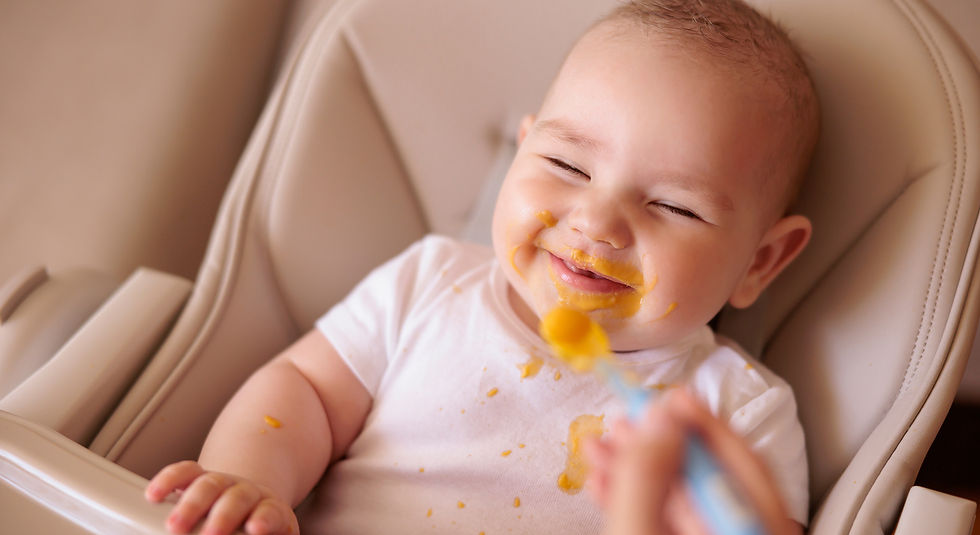
• Most of the food ends up on the bib, highchair, and floor — not in their mouth.
This is totally normal.
• Your baby's poop will change in color, smell, and texture. You might even see food
particles in the diaper.
• Your baby may seem uninterested or even annoyed at first. Keep offering calmly
and consistently.
• Some babies take to solids immediately; others need several weeks to get the
hang of it.
• Breastfeeding or bottle feeding may slow down a little as solids increase, but milk should remain the primary food source through 12 months.
Remember: you're not just feeding your baby — you're teaching them how to eat. That's a big deal, and it takes time. Be patient with yourself and with your baby.
Final Thoughts on Introducing Solid Foods to Baby
Introducing solid foods to baby is one of the most memorable milestones of the first year. It marks the beginning of a whole new relationship your child will have with food — one that, with the right foundation, can be healthy, joyful, and adventurous.
By starting at the right time, going slowly, introducing foods one at a time, keeping mealtimes positive, and supporting your baby's gut health through this big transition, you're giving your baby the very best start.
Most importantly, trust yourself. You know your baby better than anyone. And with the tips and knowledge in this guide, you're more than ready to make introducing solid foods to baby a wonderful adventure.
Disclaimer: This blog post is for informational and educational purposes only and is not intended to diagnose, treat, cure, or prevent any disease or health condition. Always consult your pediatrician or a qualified healthcare professional with questions or concerns about your baby's health and nutrition.
Comments