9 Best Tips for Preparing the Nursery Before Baby Arrives
- L. Hayes
- Apr 29
- 7 min read
Updated: May 1
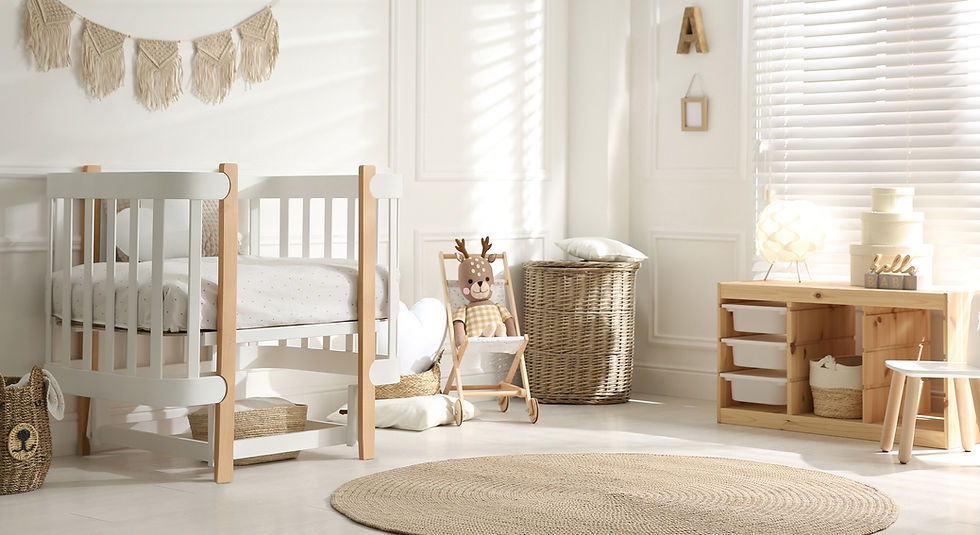
The Complete First-Time Parent Guide
The nursery is more than just a cute room — it's your baby's first safe space, and yours too. Here's exactly how to get it right before the big day.
There's something magical about walking into a freshly set-up nursery. The tiny clothes folded neatly in the dresser. The soft glow of a nightlight in the corner. The crib all made up and waiting. If you're currently pregnant and have started to feel that burst of energy and motivation known as "the nesting instinct," you're not alone — and it's absolutely telling you something important: it's time to get that nursery ready.
Preparing the nursery is one of the most exciting parts of getting ready for a new baby. But it can also feel completely overwhelming, especially for first-time parents. There are so many things to think about — safety, layout, lighting, storage, furniture, and about a hundred products that all claim to be "must-haves." So where do you even start?
That's exactly what this guide is here for. We've put together the 9 best tips for preparing the nursery before your baby arrives — covering everything from safe sleep setup to smart storage solutions, with honest advice that actually helps. By the time you finish reading, you'll have a clear plan, a calmer mind, and a nursery your whole family will love.

When Should You Start Preparing the Nursery?
This is one of the most common questions expectant parents ask, and the short answer is: earlier than you think. Most experts suggest starting to plan and shop for the nursery around the second trimester — somewhere between 20 and 28 weeks — so that everything is fully in place by week 36 or 37, just in case your baby decides to arrive a little early.
SUGGESTED NURSERY PREP TIMELINE
WEEKS 16–20
Decide on the room, theme, and color palette. Begin researching furniture and big-ticket items.
WEEKS 20–28
Purchase crib, dresser, and glider. Order items that need assembly or long shipping times.
WEEKS 28–34
Wash and organize baby clothes. Set up the changing station. Add décor and finishing touches.
BY WEEK 36
Nursery should be fully ready to use. Pack your hospital bag and enjoy the finished room!
1. Start with Safe Sleep — Everything Else Comes Second
Before you think about wall colors or mobile designs, the very first priority when preparing the nursery is creating a safe sleep environment for your baby. Safe sleep guidelines exist to reduce the risk of Sudden Infant Death Syndrome (SIDS) and other sleep-related dangers, and they are worth taking seriously.
The American Academy of Pediatrics (AAP) recommends that babies sleep on a firm, flat surface with no soft bedding, pillows, bumpers, or stuffed animals in the crib. The crib mattress should fit snugly with no gaps around the edges. Additionally, your baby should always be placed on their back to sleep — every single time, for every nap and every nighttime sleep.
SAFE SLEEP CHECKLIST
Firm, flat crib mattress · No loose bedding, bumpers, or pillows · Baby always on their back · Room temperature between 68–72°F · Keep the crib free of toys and positioners
When it comes to cribs, look for one that meets current Consumer Product Safety Commission (CPSC) standards. Avoid secondhand cribs that are more than 10 years old or that have any broken, missing, or modified parts. Your baby's safety is the foundation that everything else in nursery prep is built upon.
2. Choose the Right Location in Your Home
Not every room in the house is equally suited for a nursery. When preparing the nursery, think carefully about which room will work best — not just aesthetically, but practically. Ideally, the nursery should be close to your own bedroom, especially in those early months when you'll be getting up multiple times a night for feedings.
Consider the room's natural light. A room with a window that lets in morning sun is lovely, but you'll also want the ability to make it very dark for nap time — so good blackout curtains or blinds are essential. Furthermore, think about noise. A room above a garage, near a busy street, or next to a loud HVAC unit may not be the most peaceful environment for a sleeping newborn.
SMART LAYOUT TIP
Position the crib away from windows, vents, radiators, and any cords from blinds or curtains. Cord safety is one of the most commonly overlooked nursery hazards — make sure all window cords are secured or replaced with cordless options.
3. Get the Lighting Right — Day and Night
Lighting is one of the most underrated parts of preparing the nursery, but it matters more than most new parents realize. Your baby's sleep is heavily influenced by light cues. Bright light signals the brain to stay awake; darkness signals it to sleep. Therefore, creating a nursery that can shift between bright daytime light and very dim nighttime light is genuinely important.
Blackout curtains or shades are a must-have for nap time — a dark room makes a big difference in how well and how long your baby sleeps during the day. For nighttime feedings and diaper changes, you'll want a soft, warm nightlight or a dimmable lamp so you can see what you're doing without fully waking yourself — or your baby — up. Look for nightlights with a warm amber or red tone, as these are the least disruptive to sleep hormones.
4. Set Up a Changing Station That Actually Works
You will change your baby's diaper approximately 2,500 times in their first year of life. That number is not made up. Which is exactly why your changing station needs to be set up thoughtfully — with everything you need within arm's reach so you never have to leave your baby unattended on the changing table, even for a second.
A changing table with a safety strap and raised sides is safest. Stock it with diapers in the correct size, wipes, diaper cream, a spare change of clothes, and a small trash bin close by. Many parents also keep a small basket or organizer on the wall or shelf above the table with all the essentials grouped together. The goal is efficiency — especially at 3 a.m. when you're barely awake.
ORGANIZATION PRO TIP
Use small bins or drawer dividers to organize diapers, creams, and wipes. Group items by how often you use them — the most-used items should be the easiest to grab. Restocking the changing table once a week keeps things from running out at the worst possible moment.
5. Think About Temperature and Air Quality
Babies cannot regulate their own body temperature the way adults can, which makes the nursery's temperature a real safety consideration. The ideal room temperature for a sleeping baby is between 68 and 72 degrees Fahrenheit. A room that is too warm has been associated with a higher risk of SIDS, so it's worth investing in a simple room thermometer to keep an eye on things.
Air quality also matters. If you're painting the nursery, choose low-VOC or zero-VOC paint to reduce the release of harmful chemicals into the air. Allow the room to air out well before your baby sleeps in it. Some parents also choose to add a HEPA air purifier to the nursery — particularly in areas with high pollen counts, dust, or if either parent has allergies.
6. Plan Smart, Functional Storage
Babies come with a surprising amount of stuff. Before long, you'll have clothes in five different sizes, burp cloths, swaddles, toys, books, and a collection of small items that seem to multiply overnight. Planning smart storage as part of preparing the nursery will save you an enormous amount of stress later.
A dresser with deep drawers works well for folded clothes and larger items. Open shelving lets you display books and keep frequently used items visible and easy to grab. Baskets and bins are great for toys and soft items. Moreover, consider labeling bins and drawers — it sounds simple, but when you're sleep-deprived and looking for something quickly, a label makes a world of difference.
7. Create a Comfortable Spot for You, Too
Here's something first-time parents sometimes forget when preparing the nursery: you are going to spend a lot of time in that room. Night feedings, rocking sessions, early morning wake-ups — the nursery is your space as much as it is your baby's. That's why a comfortable chair or glider is one of the most worthwhile investments you can make.
Look for a glider or rocking chair with good lumbar support, wide armrests, and cushioning that will still be comfortable after an hour of sitting. A small side table next to the chair is incredibly helpful — a place to set your water bottle, your phone, a burp cloth, and maybe a snack for those long nighttime feeding stretches. Taking care of your own comfort in the nursery is not a luxury; it's a practical necessity.
8. Don't Forget the Sound Environment
Sound is a powerful sleep tool — and an overlooked one. White noise, which mimics the sounds your baby heard in the womb, can help newborns settle faster and sleep longer. Many parents find that a white noise machine in the nursery becomes one of their most-used baby products in the first year.
When selecting a white noise machine, look for one that has multiple sound options, a timer function, and a volume that can be adjusted. Place it at least 7 feet away from the crib and keep the volume at a safe level — around 50 decibels or lower. In addition to white noise, think about where outside sounds might intrude — if traffic, dogs barking, or household noise is an issue, a sound machine becomes even more valuable.

9. Stock It with the Right Products from Day One
The final — and perhaps most satisfying — step in preparing the nursery is making sure it's fully stocked with the products you'll actually need and use. Not every item on a baby registry is genuinely necessary, but there are certain essentials that make daily life with a newborn significantly easier. The right products, chosen thoughtfully, become part of a smooth, manageable daily routine.
This is where doing your research ahead of time really pays off. Rather than scrambling after your baby arrives — or discovering at midnight that you've run out of something critical — having a well-stocked, well-organized nursery means you can focus on what matters most: getting to know your baby, resting when you can, and finding your rhythm as a new family.
Comments